Frozen Solid Compost? Here’s What’s Happening and What to Do Next
Has your compost pile or bin has frozen solid? While it can feel like all your hard work has stopped, fear not. Frozen compost can be a normal seasonal pause for colder climates. In this quick article, learn why your compost freezes and what you can do about it.
What Frozen Compost Actually Means
When compost freezes, the water inside the pile turns to ice and microbial activity slows to near zero. Decomposition pauses, but the structure of your compost remains intact. All of the materials you have added are still there, partially broken down and ready to continue once conditions improve. Think of it as hitting pause, not reset. As soon as temperatures rise, even slightly, microbial life wakes back up and the process resumes.
Can You Still Add Scraps to Frozen Compost?
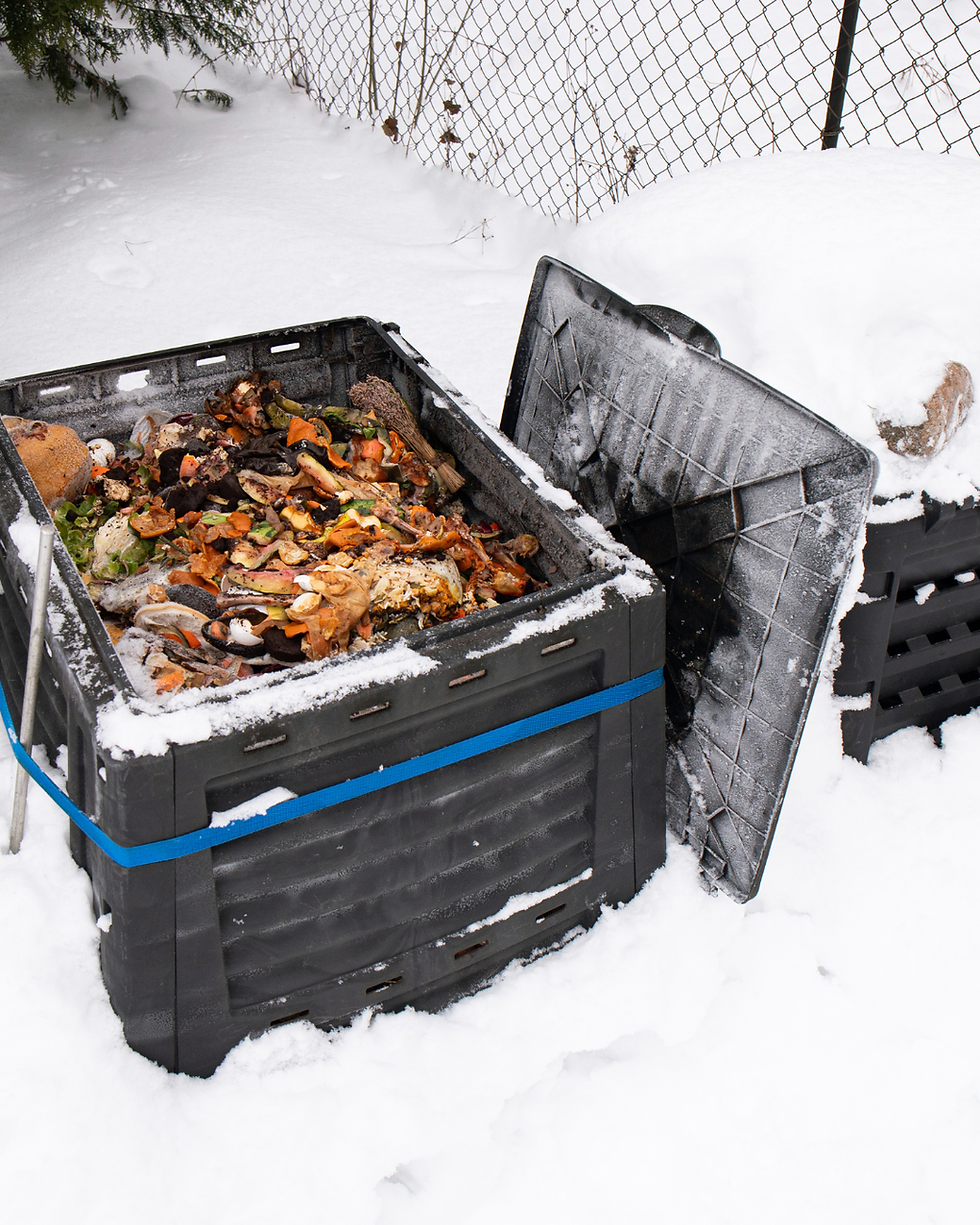
You can keep adding kitchen scraps to a frozen compost pile, but they will not break down until things thaw. For home composters, this often means food scraps sit frozen in layers. That is fine as long as the system is managed properly. If scraps are left exposed, they can attract pests even in colder conditions, so covering them with dry materials like leaves, cardboard, or existing compost helps protect the pile and maintain structure.
In smaller bins or tumblers, constant freezing and thawing can create dense, compacted layers. If possible, spreading out additions and mixing lightly before the pile fully freezes can help avoid this issue later.
Should You Try to Fix It?
In most cases, there is nothing to fix. Compost systems are designed to handle seasonal changes. Trying to force activity during freezing conditions is usually unnecessary and inefficient. Turning a frozen pile is difficult and does not restart decomposition. Adding large amounts of water can create ice buildup and make the situation worse.
If you want to stay active during winter, the best approach is preparation, not correction. Keeping a balance of browns and greens, maintaining some insulation with leaves or straw, and avoiding large, wet clumps going into the pile can make spring recovery smoother.
What Happens When It Thaws
As temperatures rise, your compost will begin to thaw from the outside in. This is when activity returns quickly. Microbes reactivate, moisture redistributes, and decomposition accelerates, especially if materials have been sitting and softening during the freeze.
This is the moment to step back in. Turning the pile once it is no longer frozen helps reintroduce oxygen and mix partially decomposed materials. If the compost feels too wet from melting ice, adding dry browns like shredded cardboard or mulch helps rebalance it. If it feels dry after thawing, a small amount of water can support microbial recovery. Spring is often when compost systems become most active again, and frozen winter piles can break down rapidly once conditions are right.
Frozen Compost in Different Systems
In backyard piles and 3-bin systems, freezing is common and expected in colder climates. Larger piles may even stay active in the center while the outer layer freezes, since internal heat can be retained if the pile is large enough.
In compost tumblers, freezing tends to stop the entire system more quickly because of the smaller volume. These systems often need more attention after thawing to break up compacted material and restore airflow.
In worm bins, freezing is a serious issue. Worms cannot survive in frozen conditions, so indoor placement or insulation is critical. If a worm bin freezes completely, the worm population may not recover, even if the material itself can still decompose later.
In bokashi systems, freezing does not stop fermentation in the same way it stops traditional composting, but it can slow the process. Keeping bokashi bins in a more stable temperature environment allows fermentation to continue more consistently.
Does Frozen Compost Go Bad?
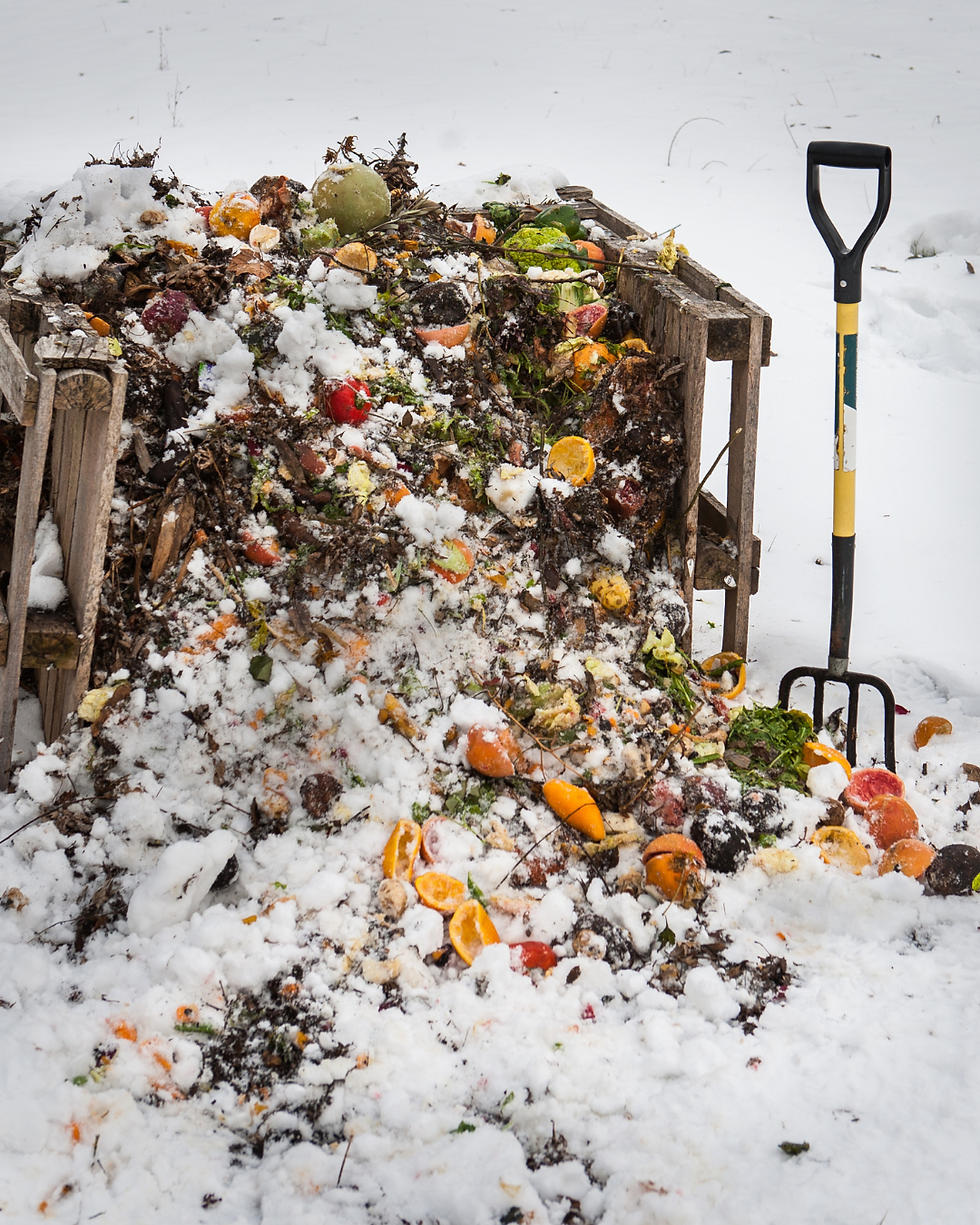
Frozen compost does not go bad. It does not rot in a harmful way during freezing because microbial activity is paused. Once thawed, it continues breaking down as long as moisture, airflow, and balance are restored. The only real risk comes from poor management before or after freezing, such as excess moisture, compaction, or pest access. Keep adding materials thoughtfully, protect the pile from exposure, and let nature handle the pause. When temperatures rise, your compost will pick up right where it left off.
About Let’s Go Compost
Let’s Go Compost is a national nonprofit making composting simple, affordable, and accessible. Our programs bring hands-on composting to communities, helping people turn food and plant waste into healthy soil that supports food systems, native plant ecosystems, and pollinators. Learn more at letsgocompost.org and support our work at letsgocompost.org/donate.