How to Use Compost for Pollinator Gardens: How Healthy Soil Supports Bees, Butterflies, and Other Wildlife
- 1 day ago
- 5 min read

When people think about creating a pollinator garden, they usually focus on the plants. Milkweed for monarch butterflies. Coneflowers for bees. Native asters for late-season nectar. But before any flower blooms, there's another ecosystem that deserves attention: the soil!
Healthy pollinator gardens begin below ground. The soil beneath your plants supports billions of microorganisms, stores water, anchors roots, and cycles nutrients. Compost can help build that healthy foundation, but like every gardening tool, it works best when used thoughtfully.
Whether you're planting a backyard pollinator garden, restoring native habitat, or creating a school or community garden, understanding how compost fits into the larger ecosystem can help you build a healthier landscape for both plants and wildlife.
What Is Compost?
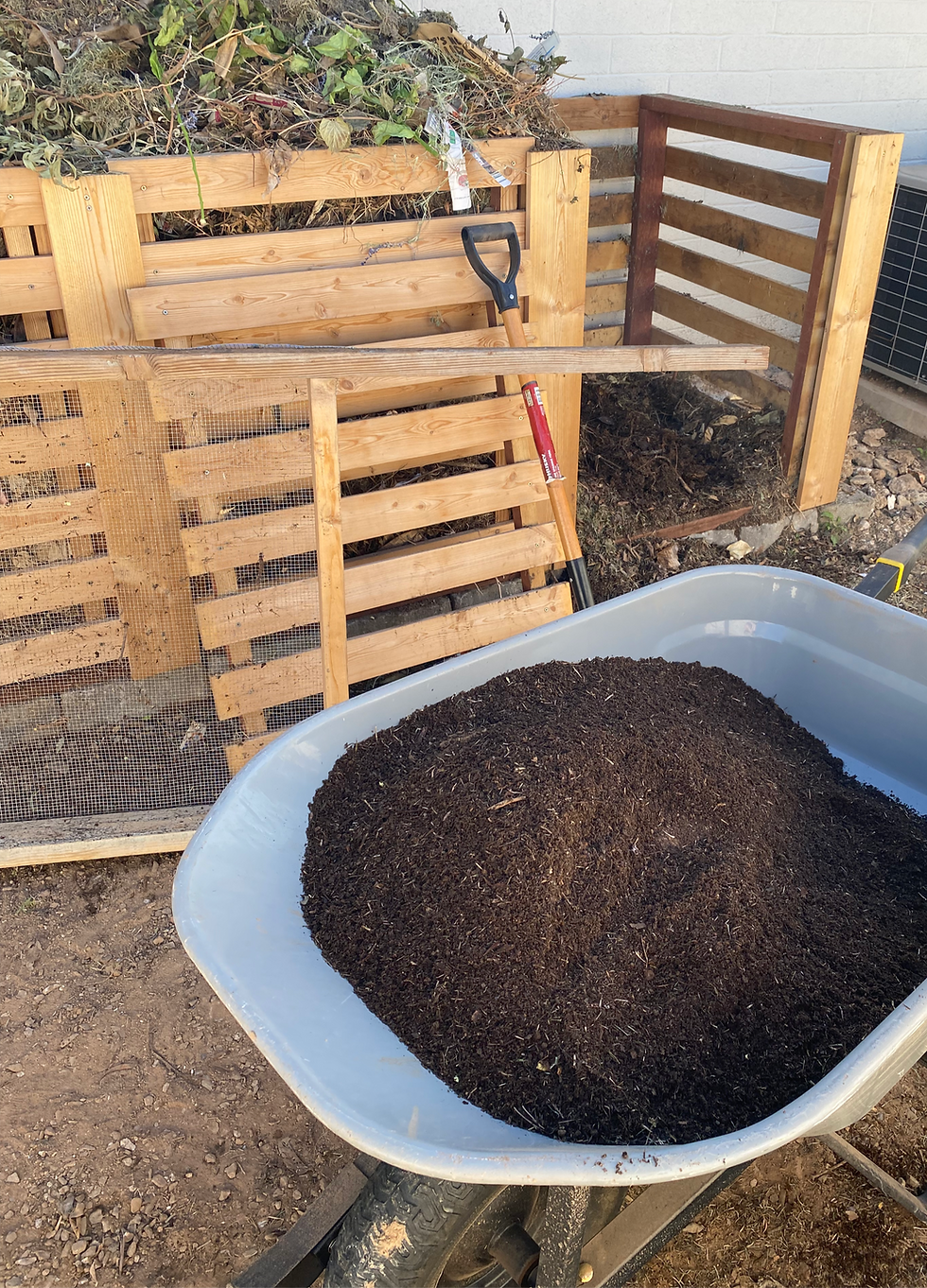
Compost is decomposed organic matter made from materials like food scraps, leaves, grass clippings, and other plant materials. As these materials break down, they become a dark, crumbly soil amendment filled with organic matter and beneficial microorganisms. Unlike fertilizer, compost doesn't simply feed plants. It improves the soil itself by supporting the living ecosystem below ground.

Why Soil Matters in Pollinator Gardens
Pollinator gardens are designed to provide nectar, pollen, seeds, shelter, and nesting habitat for wildlife. Healthy soil supports that goal by helping plants establish strong root systems and become more resilient to drought, heat, and changing weather conditions. Healthy soil can also:
Improve water infiltration
Reduce erosion
Increase biological activity
Improve soil structure
Support long-term plant health
A thriving pollinator garden begins with healthy soil.
Do Pollinator Gardens Need Compost?
Sometimes. The answer depends on the plants you're growing and the condition of your existing soil. Many pollinator gardens feature native plants, and native plants evolved in a wide variety of soil conditions. Some naturally grow in nutrient-rich woodland soils. Others thrive in dry prairies, rocky slopes, deserts, or sandy coastal habitats where organic matter is relatively low. Because of this, there isn't a universal recommendation for compost.
Instead, ask two questions:
What type of plants am I growing?
Does my existing soil resemble the conditions where those plants naturally evolved?

If your landscape has been disturbed through construction, grading, or years of lawn maintenance, compost may help restore healthy soil structure. If your soil already closely resembles the plants' natural habitat, adding large amounts of compost may provide little benefit.
How Compost Benefits Pollinator Gardens
When compost is appropriate for your site, it can improve both plant health and habitat quality.
Improves Soil Structure
Compost helps create spaces for air, water, roots, fungi, and soil organisms. Healthy soil structure supports healthier plants.
Supports Soil Biology
Healthy gardens depend on far more than flowers. Earthworms, fungi, bacteria, beetles, springtails, and countless microscopic organisms recycle nutrients and maintain healthy soil. Compost helps feed these underground communities.
Improves Water Management
Pollinator gardens often rely on rainfall rather than irrigation. Compost can improve water infiltration and moisture retention in degraded soils, helping young plants establish more successfully.
Reduces Food Waste
Every batch of compost represents organic materials that stayed out of the landfill. Food scraps, leaves, and yard trimmings become valuable resources that help support healthy landscapes.
Compost Is Only One Piece of a Healthy Pollinator Garden

Healthy soil is important, but pollinators need much more than flowers. The most successful pollinator gardens also provide:
Native plants that bloom throughout the growing season
Diverse flower shapes and colors
Host plants for butterfly and moth larvae
Bare soil for many ground-nesting native bees
Leaf litter and stems for overwintering insects
Access to shallow water
Reduced pesticide use
Compost supports this habitat by improving soil where improvement is actually needed.
How Much Compost Should You Use?
More isn't always better. For many new pollinator gardens established in compacted or disturbed soil, applying 1 to 2 inches of finished compost before planting can improve soil structure. For established gardens, a light top dressing may be appropriate if organic matter is low or plants are struggling due to degraded soil. Avoid filling individual planting holes with large amounts of compost, especially when planting native species adapted to lean soils.
Which Plants Benefit Most?
Plants that naturally grow in woodland or richer prairie soils may benefit from moderate compost additions during establishment. Many drought-adapted species (including some native grasses, desert wildflowers, and succulents) often require much less organic matter. Rather than treating all pollinator plants the same, research the natural habitat of the species you're planting and match your soil management to those conditions.

Common Mistakes
Some of the most common mistakes include:
Assuming every pollinator plant wants rich soil
Adding compost every year without evaluating soil conditions
Using unfinished compost
Treating compost like fertilizer
Ignoring the needs of local native plants
The healthiest pollinator gardens imitate nature rather than trying to maximize plant growth.
Compost and School Pollinator Gardens
Pollinator gardens are excellent outdoor classrooms. Students can observe:
Soil organisms
Plant growth
Butterfly and bee activity
Decomposition
Nutrient cycling
Seasonal flowering

When schools compost cafeteria food scraps or garden waste, students can see a complete cycle in action!
Food scraps become compost.
Compost improves soil.
Healthy soil supports flowering plants.
Flowers support pollinators.
Pollinators help support healthy ecosystems and food production.
Frequently Asked Questions
Is compost good for all pollinator gardens?
Not necessarily. It depends on the soil and the plant species you're growing. Many gardens benefit from compost, but some native plants naturally thrive in soils with relatively little organic matter.
Can compost replace fertilizer?
Sometimes. Compost improves long-term soil health and slowly releases nutrients, but some ornamental plants or nutrient-demanding species may still benefit from additional fertilization.
Is compost enough to create a pollinator garden?
No. Healthy pollinator habitat also depends on plant diversity, bloom timing, nesting habitat, water sources, and minimizing pesticide use.
Can I use homemade compost?
Yes, provided it is fully finished, free of contaminants, and made from clean feedstocks.

Healthy Soil Creates Healthy Habitat
A successful pollinator garden isn't measured by the number of flowers it produces, it's measured by the life it supports. Healthy soil creates the conditions for resilient plants, thriving microbial communities, and long-lasting habitat for bees, butterflies, hummingbirds, beetles, moths, and countless other beneficial species. Compost can play an important role in building that foundation, particularly in degraded or disturbed soils, but it isn't a one-size-fits-all solution.
The best pollinator gardens work with nature, not against it. Understanding your soil, selecting plants that are native or well-adapted to your region, and using compost where it supports the natural ecosystem can help you create a landscape that benefits both wildlife and the environment for years to come.
About Let’s Go Compost
Let’s Go Compost is a national nonprofit making composting simple, affordable, and accessible. Our programs bring hands-on composting to communities, helping people turn food and plant waste into healthy soil that supports food systems, native plant ecosystems, and pollinators. Learn more at letsgocompost.org and support our work at letsgocompost.org/donate.