


Compost and Water Conservation: A Practical Guide for Gardeners
- 6 hours ago
- 16 min read
Water conservation starts in the soil! Many people think saving water means choosing drought-tolerant plants or installing drip irrigation. Those are helpful tools, but they work best when the soil can actually absorb and hold water. If soil is compacted, sandy, low in organic matter, or exposed to sun and wind, much of the water applied to it is lost through runoff, evaporation, or deep drainage below the root zone.
Compost helps solve that problem. Finished compost adds organic matter to soil. That organic matter improves soil structure, supports soil life, helps roots grow, and allows soil to hold moisture more effectively. For gardeners, that can mean healthier plants and less frequent watering. For schools and community gardens, it can mean fewer failed beds, lower maintenance, and stronger outdoor learning spaces. Compost is not magic. It will not replace watering entirely, and it will not fix every soil problem overnight. Used correctly, it is one of the most practical tools for building water-wise gardens.

What Is Compost?
Compost is decomposed organic material. It is made when food scraps, leaves, grass clippings, garden waste, wood chips, paper, and other plant-based materials break down into a dark, crumbly soil amendment. Finished compost should look and smell earthy. It should not smell rotten, sour, or like ammonia. It should no longer resemble fresh food scraps. Compost is used to improve soil. It is not the same as fertilizer, mulch, potting soil, or topsoil, though it can support all of those systems when used correctly.
What Is Water Conservation?
Water conservation means using water more efficiently and reducing unnecessary waste. In gardens and landscapes, water is commonly lost through:
Runoff from compacted soil
Evaporation from bare soil
Overwatering
Poor irrigation timing
Soil that drains too quickly
Weak root systems
Planting species that do not match the site
Lack of mulch
Low organic matter
Compost helps with water conservation because it improves how soil receives, stores, and releases water.
Why Compost Matters for Water Conservation
Healthy soil acts more like a sponge than a hard surface. When soil contains organic matter, it can better absorb water during irrigation or rain. It can also hold some of that water near plant roots, where it is useful. This matters in backyard gardens, raised beds, school gardens, farms, parks, and community spaces. Compost supports water conservation in four major ways:
It helps water soak into soil.
It helps soil hold moisture longer.
It reduces runoff and erosion.
It supports stronger roots that use water more efficiently.
For schools, libraries, and community gardens, this is especially important because watering is often inconsistent. A garden may be watered during class but ignored on weekends, holidays, or summer breaks. Compost-amended soil is more forgiving than depleted soil.

How Compost Helps Soil Hold Water
Compost improves soil structure. Soil structure refers to how soil particles clump together and create spaces for air and water. Good soil has pore spaces. Some pores hold water, while others allow air to move through the soil. When compost is added to soil, it helps create better aggregation. That means the soil forms small, stable clumps instead of acting like powder, dust, hard clay, or loose sand. This helps water in several ways:
Water can enter the soil more easily.
Roots can grow through the soil more easily.
Soil can store moisture near the root zone.
Excess water can drain instead of suffocating roots.
Soil is less likely to crust, crack, or wash away.
The goal is not to make soil constantly wet. The goal is to help soil hold the right amount of moisture while still allowing air and drainage.
Compost, Sandy Soil, and Water Retention
Sandy soil drains quickly. Water often moves through it before plant roots can use it. Signs of sandy soil include:
Water disappears quickly after irrigation
Soil feels gritty
Plants wilt soon after watering
Nutrients wash out easily
Raised beds dry out fast
Seedlings struggle during hot weather
Compost helps sandy soil hold more moisture by adding organic matter. Organic matter acts like a moisture buffer, slowing the movement of water through the soil.
For sandy soil, compost is especially useful in:
Vegetable gardens
Raised beds
School gardens
Pollinator gardens
Fruit tree basins
New planting areas
Best Compost Use for Sandy Soil
Add 1 to 2 inches of finished compost over the bed and mix it into the top 6 inches of soil before planting. For existing plants, apply compost around the root zone and cover it with mulch. Sandy soil usually needs repeated organic matter additions over time. One application helps, but annual compost use is more effective.
Compost, Clay Soil, and Water Movement
Clay soil holds water, but it does not always make water available to plants. Compacted clay can repel water at the surface, drain slowly, and become hard when dry. Signs of clay soil include:
Water puddles on the surface
Soil feels sticky when wet
Soil becomes brick-hard when dry
Roots stay shallow
Plants yellow from poor drainage
Foot traffic causes compaction

Compost helps clay soil by improving structure. It creates more pore space, which allows water to soak in and air to reach roots. The goal with clay soil is not simply to “hold more water.” Clay already holds water. The goal is to improve infiltration, drainage, and root access.
Best Compost Use for Clay Soil
Add 1 to 2 inches of finished compost and gently incorporate it into the top few inches of soil. Avoid working clay soil when it is very wet, because that can make compaction worse. For established beds, topdress with compost and mulch. Soil organisms, roots, and weather will gradually move organic matter downward.
Compost, Raised Beds, and Water Efficiency
Raised beds often drain faster than in-ground beds. That can be helpful in wet climates, but in hot or dry regions it can create watering problems. Compost helps raised beds hold moisture while keeping soil loose. For raised beds, use compost as part of the soil blend, not as the entire growing medium. Too much compost can cause nutrient imbalance, shrinkage, poor drainage, or excessive moisture in some conditions.
Best Compost Use for Raised Beds
For new raised beds, mix compost with mineral soil or a high-quality raised bed mix. A common approach is to include compost as 20 to 30 percent of the total blend.
For existing raised beds, add 1 inch of compost once or twice per year. Cover with mulch to reduce evaporation.
Compost, Containers, and Potted Plants
Containers dry out quickly because they have limited soil volume and more exposure to air. Compost can help container mixes hold moisture, but it must be used carefully. Compost alone is usually too dense for pots and can lead to poor drainage.
Best Compost Use for Containers
Use compost as a small portion of a potting mix. For many containers, 10 to 20 percent compost is enough. The rest should be a well-draining potting mix suited to the plant. Do not fill containers with straight compost. It may compact, stay too wet, or create nutrient problems.
Compost vs. Mulch: Which Saves More Water?
Compost and mulch work together, but they are not the same. Compost improves the soil and mulch protects the soil surface. Compost helps water soak in and stay available in the root zone. Mulch reduces evaporation, moderates soil temperature, prevents crusting, and protects soil from wind and heavy rain. For water conservation, the best strategy is often:
Add compost to improve soil.
Add mulch on top to protect the moisture you just helped store.

Simple Rule
Use compost below. Use mulch above.
Materials Needed for a Water-Saving Compost Project
For a home garden, school garden, or community bed, you may need:
Finished compost
Mulch such as leaves, straw, wood chips, or shredded bark
Garden fork or hand trowel
Rake
Watering can or hose
Drip irrigation or soaker hose if available
Moisture meter, optional
Soil thermometer, optional
Gloves
Bucket
Plant labels
Measuring tape
Notebook or garden log
For classroom use, add:
Clipboards
Student observation sheets
Clear jars for soil tests
Spray bottles
Magnifying glasses
Food scrap collection container if composting onsite
Handwashing station or sanitizer
Step-by-Step: How To Use Compost To Conserve Water in a Garden Bed
Step 1: Check Your Soil
Before adding anything, observe how water behaves. Water the soil for 1 to 2 minutes and watch what happens. Ask:
Does water soak in quickly?
Does it run off?
Does it puddle?
Does the soil stay dry underneath?
Does the surface crust?
Is the soil loose, gritty, sticky, or compacted?
This tells you whether your main problem is fast drainage, poor infiltration, compaction, or evaporation.

Step 2: Add Finished Compost
Spread 1 to 2 inches of finished compost over the garden bed. For new beds, mix it into the top 4 to 6 inches of soil. For established beds, spread compost around plants without piling it against stems.
Step 3: Water Deeply
After adding compost, water the area slowly and deeply. This helps settle the compost and soil together. Slow watering is better than blasting the surface with a hose.
Step 4: Add Mulch
Add 2 to 3 inches of mulch on top of the soil. Keep mulch a few inches away from plant stems, tree trunks, and building foundations. Mulch helps reduce evaporation and protects the compost-amended soil.
Step 5: Water Less Often, But More Deeply
Frequent shallow watering encourages shallow roots. Deeper watering encourages roots to grow downward, where moisture lasts longer. Check soil moisture before watering. Stick your finger 1 to 2 inches into the soil. If it is still moist, wait.
Step 6: Track the Results
For two weeks, record:
Watering dates
Weather
Soil moisture
Plant appearance
Wilting
Runoff
Mulch condition
This is especially useful for school gardens and community projects because it turns water conservation into a measurable science activity.
How Much Compost Should You Use?
For most garden beds, use 1 to 2 inches of finished compost per year. For poor soil, new beds, or very sandy soil, 2 inches may be appropriate. For established beds with healthy soil, ½ inch to 1 inch may be enough. For containers, use compost as 10 to 20 percent of the potting mix. For raised beds, compost can usually make up 20 to 30 percent of the total soil blend, depending on the materials used. More is not always better. Too much compost can create nutrient excess, drainage problems, or overly rich soil for plants that prefer lean conditions.
Time Expectations
Home Garden
A small garden bed can be amended with compost and mulch in 30 to 60 minutes.
School Garden
A classroom garden activity usually takes 45 to 90 minutes, depending on age group and setup.

Community Garden
A shared bed improvement day may take 2 to 4 hours, especially if soil is compacted or mulch needs to be moved in.
Long-Term Results
Some benefits are immediate, such as better surface moisture and reduced crusting. Larger changes in soil structure happen over months and years with repeated compost use, mulch, roots, and reduced disturbance.
Cost Considerations
Compost costs vary based on source, quality, and volume.
Typical Compost Sources
Homemade compost: lowest cost, highest time investment
Municipal compost: often low-cost or free, quality varies
Bagged compost: convenient, higher cost per volume
Bulk compost: better for large gardens, delivery may cost extra
School or community compost systems: low material cost over time, requires management
Budget Ranges
Small container project: $5 to $20
Small raised bed: $15 to $60
Large garden: $100 to $500 or more depending on size
The most cost-effective approach is usually combining locally produced compost with free or low-cost mulch such as fall leaves, arborist wood chips, or untreated shredded plant material.
Age Recommendations for Educational Activities
Ages 3 to 5
Keep lessons short, sensory, and supervised. Best activities:
Touching finished compost
Comparing dry soil and moist soil
Watering with spray bottles
Observing worms with adult support
Sorting pretend food scraps
Ages 6 to 8
Students can begin connecting food scraps to soil and plant growth. Best activities:
Soil sponge demonstrations
Compost and sand comparison
Garden watering charts
Mulch observation
Simple food scrap sorting
Ages 9 to 12
Students can collect data and discuss cause and effect. Best activities:
Infiltration tests
Soil moisture tracking
Compost recipe building
Raised bed experiments
Comparing mulched and unmulched soil
Middle School
Students can connect compost to systems thinking. Best activities:
Water retention experiments
Compost system monitoring
Food waste audits
Graphing soil moisture over time
Designing water-wise garden plans
High School
Students can connect compost to water management, climate resilience, infrastructure, and local policy. Best activities:
Soil organic matter investigations
Irrigation efficiency studies
Compost quality analysis
Stormwater and runoff modeling
Campus food waste diversion planning

Classroom Activity: Compost as a Soil Sponge
Best For
Grades 2 through 8
Time Needed
30 to 45 minutes
Materials
Two clear cups or jars
Sandy soil or dry garden soil
Finished compost
Coffee filters or mesh
Rubber bands
Measuring cup
Water
Tray
Student worksheet
Instructions
Fill one cup with dry soil.
Fill the second cup with a mix of soil and compost.
Pour the same amount of water through each sample.
Observe how quickly water moves through.
Compare how much water drains out.
Discuss which sample held more moisture.
Connect the results to garden watering.
Discussion Questions
Which soil held water longer?
Which soil drained faster?
What might happen to plants in each soil?
How could compost help a school garden during a hot weekend?
Why does bare soil dry faster than covered soil?
Garden Activity: Mulched vs. Unmulched Soil
Best For
Home gardens, school gardens, libraries, and nature centers
Time Needed
Setup: 20 minutes
Observation: 1 week
Materials
Two similar garden areas or containers
Finished compost
Mulch
Watering can
Soil moisture meter or finger test
Observation sheet
Instructions
Add compost to both areas.
Cover one area with mulch.
Leave the other soil surface bare.
Water both areas equally.
Check soil moisture daily.
Record which area stays moist longer.
Expected Result
The mulched area should usually retain moisture longer because the soil surface is protected from sun and wind.

Composting Applications: Turning Food Waste Into Water-Saving Soil
Compost connects food waste reduction to water conservation. Food scraps, leaves, and garden trimmings are often treated as waste. Composting turns those materials into a soil amendment that helps gardens use water more efficiently. This creates a circular system:
Food scraps are collected.
Organic materials are composted.
Finished compost is added to soil.
Soil holds water better.
Plants grow stronger.
Gardens produce food, flowers, shade, and habitat.
More organic material returns to the compost system.
For schools, this is a powerful model because students can see the full cycle. Food waste from lunch or snack time becomes a resource that supports the garden.
School and Community Implementation Ideas
School Garden Water-Saving Plan
A school can use compost to improve garden success with a simple system:
Start with one raised bed or outdoor container garden.
Add finished compost before planting.
Mulch after planting.
Assign watering teams.
Track soil moisture twice per week.
Compare plant growth and watering frequency.
Connect observations to science standards.
This works especially well for schools with limited maintenance support.
Library Demonstration Garden
Libraries can create a small water-wise demonstration planter with:
Compost-amended soil
Mulch
Drought-tolerant herbs or native plants
A sign explaining how compost helps soil hold moisture
A family activity card
This makes water conservation visible without requiring a large garden.
Community Garden Compost Hub
Community gardens can reduce waste and improve soil by creating a shared compost system for approved plant scraps. Important operational considerations include:
Clear signage
Accepted materials list
Trained volunteers
Pest prevention
Regular turning or monitoring
Finished compost curing area
Application schedule for beds
Compost systems work best when someone is clearly responsible for maintenance.
Gardening Applications
Compost supports water conservation in many gardening settings.
Vegetable Gardens
Compost helps vegetable beds hold moisture and nutrients. This is especially useful for tomatoes, peppers, squash, cucumbers, greens, and herbs.
Pollinator Gardens
Compost can help new pollinator plants establish stronger roots. Use moderately, especially with native plants that prefer lean soil.
Fruit Trees
Compost can be applied around the drip line of fruit trees, then covered with mulch. Do not pile compost or mulch against the trunk.
Native Plant Gardens
Use compost carefully. Some native plants prefer low-nutrient soil. Compost may be useful during establishment or in heavily disturbed urban soil, but it is not always needed.
Lawns
A thin compost topdressing can improve soil structure and moisture management in turf areas. Avoid thick layers that smother grass.

Common Mistakes
Mistake 1: Using Unfinished Compost
Unfinished compost may smell bad, attract pests, or compete with plants for nitrogen.
Use compost that is dark, crumbly, and earthy.
Mistake 2: Adding Too Much Compost
More compost does not always mean better soil. Excess compost can create nutrient imbalance and drainage issues. Use measured amounts.
Mistake 3: Skipping Mulch
Compost improves soil, but bare soil still loses water quickly. Mulch protects the surface.
Mistake 4: Watering Too Often
Compost helps soil hold moisture, but overwatering can still damage roots. Check soil before watering.
Mistake 5: Treating Compost Like Potting Soil
Compost is a soil amendment. It should usually be mixed with soil or potting media, not used alone.
Mistake 6: Ignoring Soil Type
Sandy soil and clay soil need different strategies. Compost helps both, but for different reasons.
Mistake 7: Forgetting Maintenance
One compost application is helpful, but long-term water conservation requires repeated soil care, mulch, roots, and thoughtful watering.
Troubleshooting
Problem: Water Runs Off the Soil Surface
Possible causes:
Compaction
Dry, crusted soil
Slope
Bare soil
Heavy watering too quickly
Solutions:
Add compost
Loosen soil gently
Water slowly
Add mulch
Use drip irrigation or a soaker hose
Create small basins around plants
Problem: Soil Dries Out Too Fast
Possible causes:
Sandy soil
Raised bed exposure
No mulch
Shallow watering
Too much sun or wind
Solutions:
Add compost
Add mulch
Water deeply
Plant closer together where appropriate
Use shade cloth for seedlings
Choose plants suited to the site
Problem: Soil Stays Too Wet
Possible causes:
Heavy clay
Poor drainage
Too much compost
Overwatering
Container without drainage holes
Solutions:
Reduce watering
Improve drainage
Avoid using compost alone in containers
Add compost gradually
Use raised beds where needed
Choose plants that tolerate wetter soil
Problem: Compost Smells Bad
Possible causes:
Compost is unfinished
Too much moisture
Too many food scraps
Not enough carbon-rich material
Poor airflow
Solutions:
Do not apply smelly compost to garden beds
Add dry leaves, shredded paper, or wood chips to the compost system
Turn or aerate the pile
Let compost cure before use
Problem: Plants Look Burned or Stressed After Compost Application
Possible causes:
Compost was too fresh
Compost had high salts
Too much compost was applied
Compost touched stems directly
Solutions:
Pull compost away from plant stems
Water deeply
Use only finished compost
Test compost source if problems continue
Apply thinner layers next time
Safety Considerations
Use Finished Compost
Finished compost is safest for gardens, especially edible gardens and school projects.
Wash Hands
Students and gardeners should wash hands after handling compost, soil, worms, mulch, or food scraps.

Avoid Risky Inputs
Do not compost meat, dairy, oily foods, pet waste, diseased plants, or chemically treated materials in beginner school or home systems.
Be Careful With Food Gardens
For edible crops, use high-quality finished compost. Avoid applying questionable compost directly to leafy greens or root crops close to harvest.
Manage Dust
Dry compost can create dust. Lightly moisten it before use, especially around children or people with respiratory sensitivities.
Prevent Pests
Bury food scraps, use proper ratios of greens and browns, and secure bins.
Check Local Rules
Some municipalities, HOAs, schools, or community gardens have rules about compost bins, food scrap collection, or water use.
Food Waste Reduction Strategies That Support Water Conservation
Reducing food waste matters before and after composting. The best order is:
Prevent avoidable food waste.
Donate edible surplus when safe and appropriate.
Feed animals where allowed.
Compost food scraps that cannot be eaten.
Use finished compost to improve soil.
In schools, this might look like:
Share tables for unopened foods
Cafeteria waste audits
Student sorting stations
Compost collection for fruit and vegetable scraps
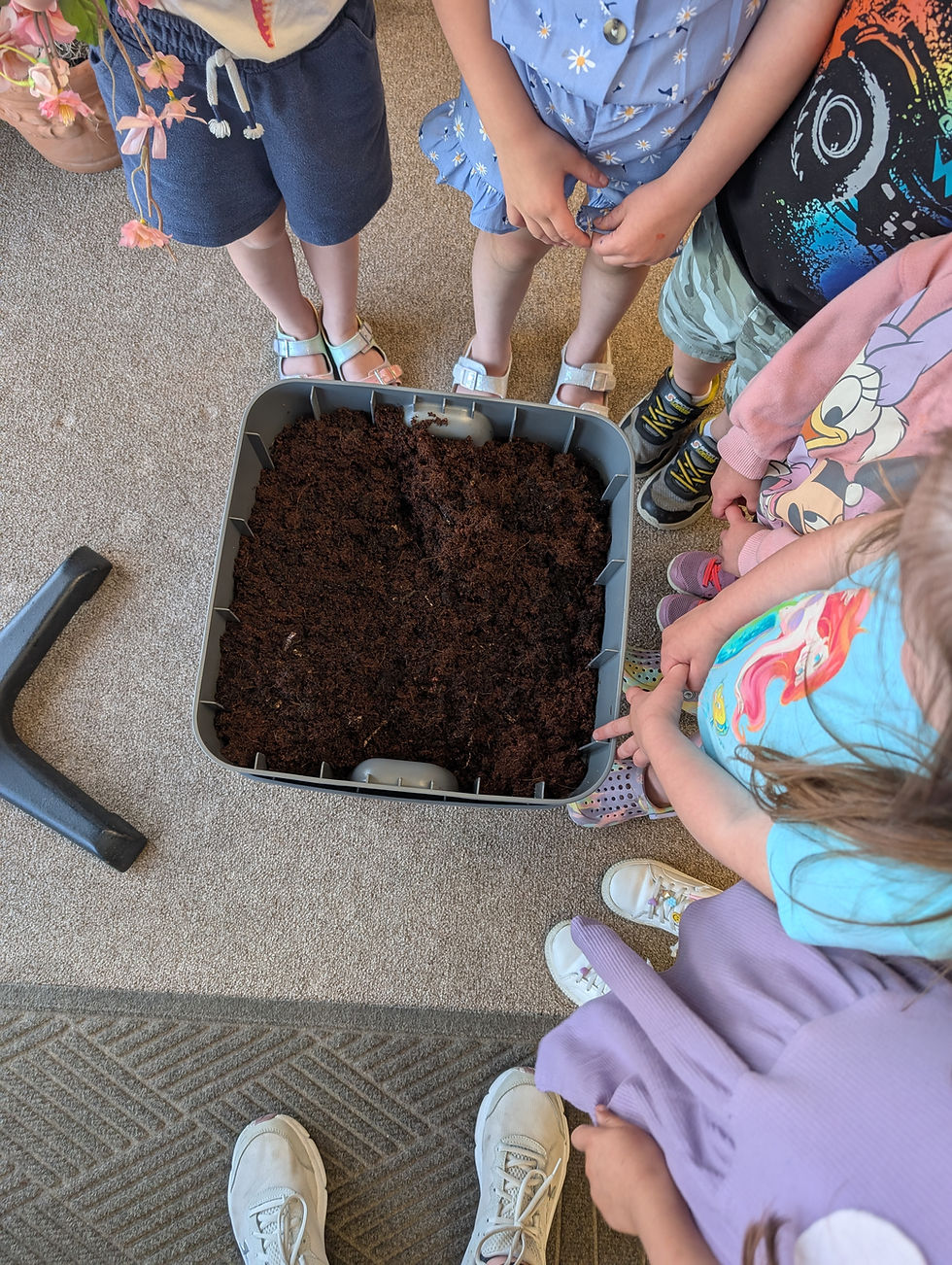
Worm bins for classroom learning
Finished compost used in garden beds
This helps students see food as a resource, not trash.
Compost and Stormwater
Compost can also help communities manage stormwater. When soil is compacted or bare, rainwater runs across the surface. That runoff can carry sediment, nutrients, trash, and pollutants into streets, drains, washes, creeks, rivers, and lakes. Compost-amended soil can help water soak in instead of running off immediately. This is useful for:
Rain gardens
Bioswales
Tree planting projects
Schoolyards
Community gardens
Erosion-prone slopes
Urban landscapes
For larger stormwater projects, compost should be selected and applied based on local specifications, site conditions, and engineering guidance.
Compost and Drought Resilience
Compost does not create water. It helps soil use available water more efficiently.
During dry periods, compost-amended soil may stay moist longer than depleted soil. Plants with stronger roots and healthier soil biology are often better able to handle stress. For drought-prone gardens, combine compost with:
Mulch
Drip irrigation
Native or climate-appropriate plants
Morning watering
Wind protection
Reduced soil disturbance
Grouping plants with similar water needs
Compost is one part of a larger water-wise strategy.
Best Practices for Water-Saving Compost Use
Use finished compost.
Apply 1 to 2 inches in garden beds.
Mix compost into new beds.
Topdress established beds.
Cover compost with mulch.
Water deeply and less often.
Avoid over-applying compost.
Match plants to the site.
Track soil moisture.
Repeat annually or seasonally as needed.
Frequently Asked Questions
Does compost really help soil hold water?
Yes. Compost adds organic matter, improves soil structure, and helps soil retain moisture near plant roots. It is especially useful in sandy soil and depleted garden beds.
Can compost reduce how often I water?
Often, yes. Compost can help soil stay moist longer, especially when paired with mulch and deep watering. It will not eliminate the need to water plants.
Is compost enough for water conservation?
No. Compost works best with mulch, efficient irrigation, climate-appropriate plants, and good watering habits.
Should I use compost or mulch to save water?
Use both. Compost improves the soil. Mulch protects the soil surface.
Can too much compost hurt plants?
Yes. Excess compost can create nutrient imbalance, poor drainage, salt issues, or overly rich soil. Use moderate amounts.
Is compost good for drought-tolerant plants?
Sometimes. Compost can help disturbed or poor soil, but some drought-tolerant and native plants prefer lean soil. Use compost carefully and research plant needs.
Can I use kitchen scraps directly in the garden to save water?
Usually, no. Fresh food scraps can attract pests, smell bad, and interfere with plant growth. Compost food scraps first.
Does compost help with runoff?
Yes. Compost can improve soil infiltration and structure, helping water soak into soil instead of running off the surface.
How often should I add compost?
Most garden beds benefit from compost once or twice per year. The right amount depends on soil condition, crop needs, and past applications.
Can schools compost food waste and use it in the garden?
Yes, but the system must be well managed. Schools should start small, use clear signage, avoid risky materials, and make sure compost is fully finished before garden use.
Related Activities
Soil sponge experiment
Cafeteria food waste audit
Mulched vs. unmulched bed comparison
Soil moisture tracking chart
Worm bin observation
Rain garden design challenge
Raised bed water test
Compost maturity smell and texture check
Food scrap sorting game
Water-wise garden mapping
Educational Applications
Compost and water conservation can support lessons in:
Soil science
Life cycles
Decomposition
Water cycle
Plant biology
Ecosystems
Human impact
Engineering design
Data collection
Measurement
Graphing
Food systems
Resource management
A simple compost and water lesson can become a full project-based learning unit. Students can investigate a real problem, collect data, test solutions, and apply findings to a garden or campus space.
Gardening Applications
The best results come from repeated, moderate compost use over time. Gardeners can use compost to:
Improve dry soil
Support vegetable production
Reduce watering frequency
Build healthier raised beds
Improve root growth
Reduce runoff
Protect soil during heat
Improve long-term soil structure
Make better use of mulch and irrigation
Composting Applications
Composting supports water conservation because it turns organic material into a soil-building resource. When managed properly, those materials become compost that can help gardens hold water, grow food, and reduce waste. A home, school, or community composting system can accept appropriate materials such as:
Fruit and vegetable scraps
Coffee grounds
Tea leaves
Crushed eggshells
Leaves
Plant trimmings
Shredded paper
Cardboard
Straw
Wood chips
Better Soil Makes Every Drop Work Harder
Water conservation is not just about using less water. It is about helping water reach the roots, stay in the soil, and support healthy plant growth. Compost helps make that possible. For a home gardener, compost can mean fewer wilted plants and better soil. For a teacher, it can turn food scraps and watering into a hands-on science lesson. For a school garden coordinator, it can make garden beds more resilient during weekends and breaks. For a community garden, it can connect food waste reduction, soil health, and water conservation in one visible system.
Start small. Add finished compost. Cover the soil with mulch. Water deeply. Watch what changes. Healthy soil is one of the most practical water conservation tools available!
About Let’s Go Compost
Let’s Go Compost is a national nonprofit making composting simple, affordable, and accessible. Our programs bring hands-on composting to communities, helping people turn food and plant waste into healthy soil that supports food systems, native plant ecosystems, and pollinators. Learn more at letsgocompost.org and support our work at letsgocompost.org/donate


